Tomorrow’s laboratory connects more than systems

Laboratories are handling increasingly complex diagnostics, while healthcare professionals and patients expect results to be delivered faster and in a clearer format. At the same time, budgets and staffing capacity are under pressure. The question is therefore not just how a laboratory can work more efficiently internally, but also what role it plays across the entire care pathway.

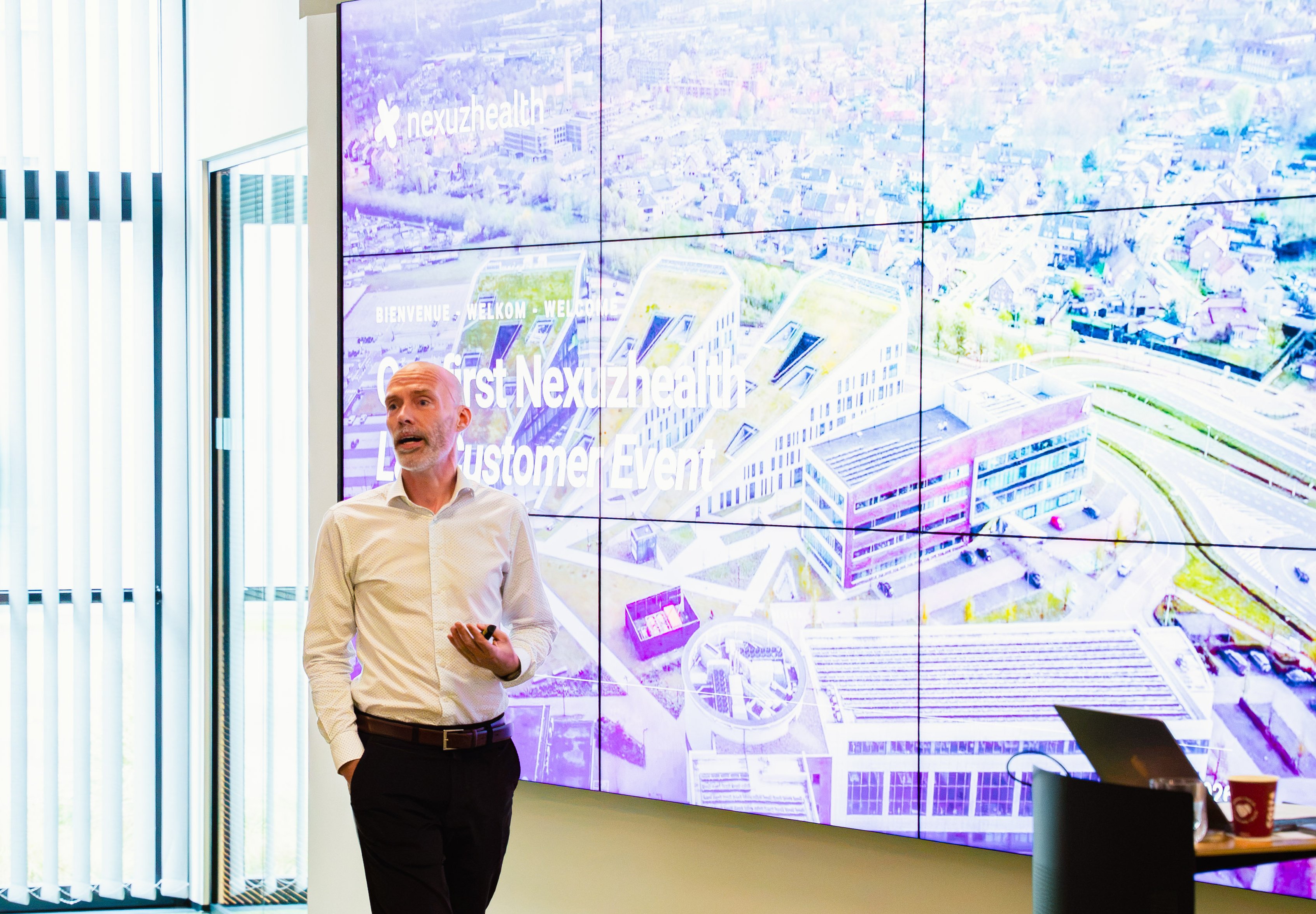
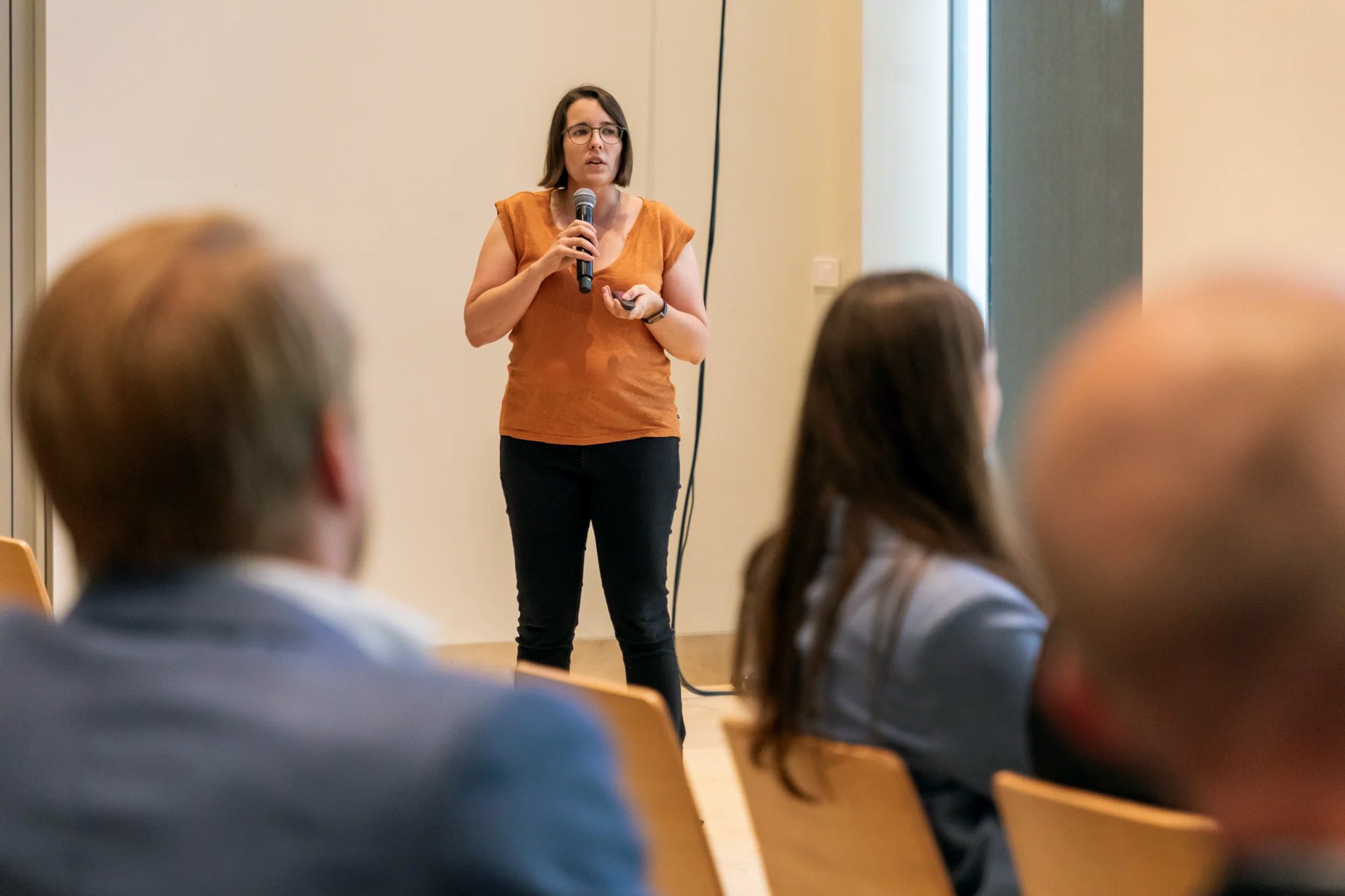
For Pieter De Smet, Business Line Director Lab, and Sara Moeys, Product Manager Lab at Nexuzhealth, the answer lies in creating a more connected way of working in laboratories. A connected lab is not a standalone solution, but a vision for the sector: instruments, laboratory disciplines, healthcare professionals and data need to work together more effectively, so that diagnostic information reaches the right place sooner and laboratories can adopt new developments more easily.

With Nexuzhealth Lab, they are translating that vision into a new generation of laboratory software. The cloud-native platform brings different laboratory disciplines together, integrates new technologies flexibly and enables laboratories to respond more quickly to diagnostic innovation. This allows laboratories to focus on their core work while the technology continues to evolve in the background.

pieter-de-smet-blog

Pieter De Smet, Business Line Director Lab at Nexuzhealth

Modern diagnostics are raising expectations

According to Pieter, clinicians’ expectations are changing. They increasingly rely on laboratories not only to provide diagnostic results, but also to help interpret them and place them in a broader clinical context.

"Laboratories are expected to do more with fewer resources. They need to work more efficiently, accurately and quickly."
Pieter-De-Smet-web
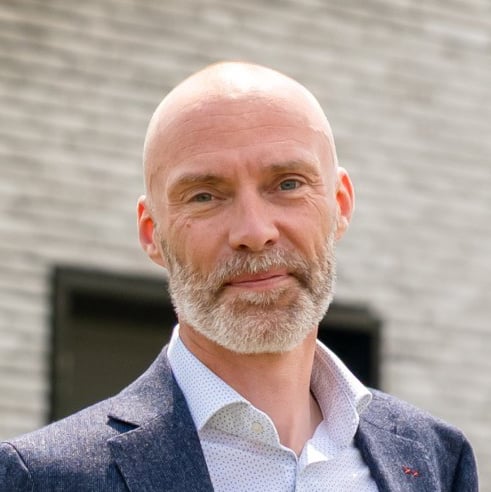
Pieter De Smet

Business Line Director Lab at Nexuzhealth

At the same time, the requesting clinician expects the laboratory to contribute its expertise and put results into a broader context. Sara sees this shift reflected in reporting, too. “In the past, doctors received a bare list: this test, that value. Today, a report needs to show which results are relevant to the individual patient and how they should be interpreted in their clinical context.”

Patients are also taking a more active role. They check their own results, ask more focused questions and expect information they can understand. At the same time, the focus is gradually shifting from treatment towards earlier detection and prevention. Sara sees the laboratory’s role changing as a result. “Diagnostics is becoming relevant at more stages of the care pathway. Laboratories are therefore doing more than providing results; they are increasingly helping to explain what those results mean.”

New forms of diagnostics are accelerating this shift. Pieter points to genetic and molecular testing as examples. “Genetic analyses such as NIPT show how tests that were once complex and expensive can now be made much more accessible through a blood sample. Other molecular tests are also moving into the laboratory. The diagnostic chain needs to be able to accommodate these new tests and instruments quickly.” Digital pathology is also bringing new images and data flows into the laboratory.

This broader role is emerging at a time when operational pressure is already high. Test volumes are increasing, technical and medical specialist profiles are in short supply, and specialist analyses are increasingly being centralised in larger networks. Sara sums up the challenge: “Analytical quality is under control. The greatest pressure is on efficiency: results need to be available sooner, with fewer people and fewer resources.”

Laboratories are also less likely to have large in-house IT teams, and want to focus their expertise on diagnostics and innovation. When software cannot scale, instruments are difficult to connect or upgrades require extensive preparation, the surrounding IT becomes a bottleneck. For Nexuzhealth, this is the central design challenge: technology must not hold back advances in diagnostics, but should make it easier to support new tests, growing volumes and new ways of working together.

Disconnected systems slow down diagnostics

For Pieter, the challenge today is not just automating processes, but also ensuring that the systems laboratories use are flexible enough. “Many laboratories are already highly automated, but the gaps between systems remain a challenge. Existing IT environments can also make it difficult to integrate new analysers, tests or applications. Diagnostics is evolving at an ever faster pace. Technology needs to keep up with these developments and enable them, rather than hold them back."

A connected lab should bridge these gaps. “It is not just about connecting instruments, but also the different laboratory disciplines and the wider healthcare network. Shared standards and open integrations are needed to allow information to flow.” With this vision, Nexuzhealth Lab supports both the integration of instruments and applications and collaboration between clinical biology, anatomical pathology and clinical genetics.

Sara illustrates this with the updated approach to cervical cancer screening. "A sample is first tested for HPV using molecular analysis in the clinical laboratory. Depending on the result, further analysis is carried out by anatomical pathology. For the doctor and the patient, this is one diagnostic question. The request, sample identification and results therefore need to remain aligned across both disciplines, so that they ultimately produce one coherent report."

"When several laboratories investigate one question, they should piece the puzzle together, not the clinician."

sara-moeys-website
Sara Moeys

Product Manager Lab at Nexuzhealth

For Pieter, connectivity goes beyond linking an instrument to the LIS. “A connected lab is connected not only technically, but also in terms of knowledge. A clinical biologist or pathologist needs to be able to draw on relevant information from other disciplines and from the centralised electronic health record, without having to search different systems for individual pieces of information.”

That connection extends beyond the laboratory walls. Results need to be available at the right time to the specialist, GP or other care partner following the patient’s pathway. European initiatives such as the European Health Data Space are driving the move towards standardised data exchange. Healthcare organisations also need to agree on what information is shared, who can access it and how it should be interpreted.

“For that to work, data needs to be structured and reliable. This allows laboratories to track results over time, analyse processes such as turnaround times and build new applications on data that can be put to good use. A system can only be as intelligent as the data it relies on,” says Pieter.

Sara sees artificial intelligence as a way to make structured working practices fit better with day-to-day reality. “Pathologists are used to dictating a report while reviewing images. AI can preserve that way of working while converting relevant information from the text into structured data.” This makes information easier to reuse without adding to the administrative burden. Clinical interpretation, validation and accountability remain with the healthcare professional.

sara-moeys-product-manager-website

Sara Moeys,  Product Manager Lab at Nexuzhealth

How Nexuzhealth Lab brings this vision to life

A connected lab requires more than technical integrations. For Pieter, it starts with a fundamental choice: bringing laboratory disciplines closer together without losing what makes each of them distinct. “Clinical biology, anatomical pathology and clinical genetics each have their own expertise and processes. At the same time, they are increasingly working on the same diagnostic question. Technology needs to help them collaborate on the same request, sample identification and reporting, without forcing them all into the same workflow. That is why we are building Nexuzhealth Lab as a single cloud-based LIS for all three disciplines.”

That openness extends beyond the boundaries of the platform.  "Laboratories will always use a combination of instruments, automation and specialist applications. You cannot expect everything to sit within a single system. The LIS should primarily act as the connecting layer that allows all these components to work together," Pieter explains.

In practice, this means connecting a wide range of technologies. "We need to communicate with individual analysers, Total Laboratory Automation and middleware, as well as specialist software for areas such as genetics and digital pathology. Wherever possible, we use international standards such as HL7, ASTM and FHIR. If a system deviates from these standards, modular drivers can provide the connection."

Laboratory continuity is another important consideration. "A laboratory cannot simply stop operating when the network connection is temporarily lost. That is why the Lab Gateway stores data locally and synchronises it as soon as the connection is restored."

According to Pieter, the same vision also shapes the platform’s technological foundations. "Laboratories want to dedicate their people and resources first and foremost to diagnostics and innovation, rather than maintaining complex IT infrastructure. Cloud-native technology and Software as a Service (SaaS) models make it possible to manage more of that technical infrastructure centrally. Capacity can also scale flexibly as volumes change, without laboratories having to make major changes to their own infrastructure every time. This gives them more room to focus on their expertise and on new developments in diagnostics."

This also changes how updates are managed. "Instead of one major upgrade bringing together years of changes, we work with smaller functional releases. A planned quarterly rhythm makes changes easier to oversee and validation more manageable for laboratories. Technical and security updates can also be rolled out more quickly, without interrupting day-to-day operations. Thanks to the zero-downtime principle, the laboratory remains operational during updates."

Greater connectivity also requires clear boundaries. “An open ecosystem does not mean that data can move freely between all systems,” Pieter emphasises. “It is essential to define exactly what information is available, who can access it and how it is protected. Data segregation, encryption, secure authentication and continuous security updates are not optional extras; they are part of the architecture.”

But technology alone will not determine what tomorrow’s laboratory looks like. Sara brings the everyday experience of users into the picture.

"You can develop a technically excellent solution, but ultimately, it needs to reflect how people actually work in a laboratory."
sara-moeys-website
Sara Moeys

Product Manager Lab at Nexuzhealth

"That is why we do not wait until a feature is fully developed before asking for feedback. Our UX designer goes onto the laboratory floor, observes how staff work today and asks them to try clickable designs of new workflows. This quickly reveals where information is missing, which steps are unnecessary and what could be made simpler. You cannot gain that understanding by sitting behind a desk."

This close collaboration with laboratory staff is also the foundation for the continued development of Nexuzhealth Lab. “We do not just want to deliver and maintain software,” Pieter concludes. "Our role is to connect IT expertise with the knowledge gained from day-to-day laboratory work. Together with laboratories, we want to keep exploring how diagnostics, technology and data are evolving, and turn those insights into a platform that can evolve with them."

The connected lab in the future of healthcare

The laboratory of the future is about more than simply doing today’s work faster.  "The laboratory is increasingly becoming a diagnostic hub,” Sara explains. “A result never exists in isolation. It needs to be viewed in its historical and clinical context, with relevant information made available to the healthcare professional who needs to act on it."

Automation, structured data and artificial intelligence can help make this possible. "Repetitive steps will increasingly be automated. AI can help search large volumes of information, identify patterns and produce clearer reports. It does not replace clinical interpretation; instead, it gives laboratory professionals more room for complex diagnostics, interpretation and targeted advice." For Pieter, the ultimate ambition comes down to the patient.

"We want to make the diagnostic pathway as short as possible, so that patients receive their results quickly and accurately. When laboratories can connect and interpret information more effectively, there is also greater scope to identify health problems earlier."
Pieter-De-Smet-web
Pieter De Smet

Business Line Director Lab at Nexuzhealth

“For patients, that could mean fewer unnecessary repeat tests, a shorter route to the right diagnosis and results that are easier to understand,” Sara adds. “At the same time, healthcare professionals no longer need to piece together information from different sources themselves. The laboratory can therefore contribute its expertise earlier and more purposefully in the care pathway.”

This is also the direction in which Nexuzhealth Lab is developing. “We want to provide a digital foundation that can grow with new forms of diagnostics and help bring innovations into day-to-day practice more quickly,” says Pieter. “New tests, technologies and applications need to be integrated smoothly, without the existing IT environment holding back progress. We can only shape this evolution by continuing to work closely with laboratories as a technology and integration partner.”

From systems to synergies is therefore not about putting everything into one system. It is about systems, data and medical expertise reinforcing one another. Laboratories that succeed in doing this will not only be ready for the future of healthcare. They will help shape it.

Discover more about Nexuzhealth Lab
Request your free personalized demo
More information

Takeaways from this article

  1. The lab as a diagnostic hub

  2. Connected lab disciplines for coherent results

  3. Open integrations that enable innovation

  4. Structured data as the foundation for data sharing and AI

  5. Technology that fits everyday lab practice