The journey towards integrated care, from hospital to the home setting

Care no longer takes place in a single location. Patients move between hospital care, general practice, home nursing, specialised care and digital follow-up. This evolution is no longer the exception but the norm. What remains constant is the need for a patient-centred approach in which healthcare professionals collaborate efficiently and rely on the same, trustworthy information. Yet care is still often organised around structures, institutions and care lines. Information too often remains confined within departments and systems, while the patient continues to move through the healthcare landscape.

Integrated, transmurally organised care therefore starts from the patient’s entire care journey. The key question is how information and decisions can follow the patient, regardless of where they are. In this article, Maarten De Gruyter and Rien Dieryckx show how this vision becomes tangible. From efficient and structured data within the hospital to targeted data sharing and collaboration across care lines, from systems to synergies.

RienFoto@2x

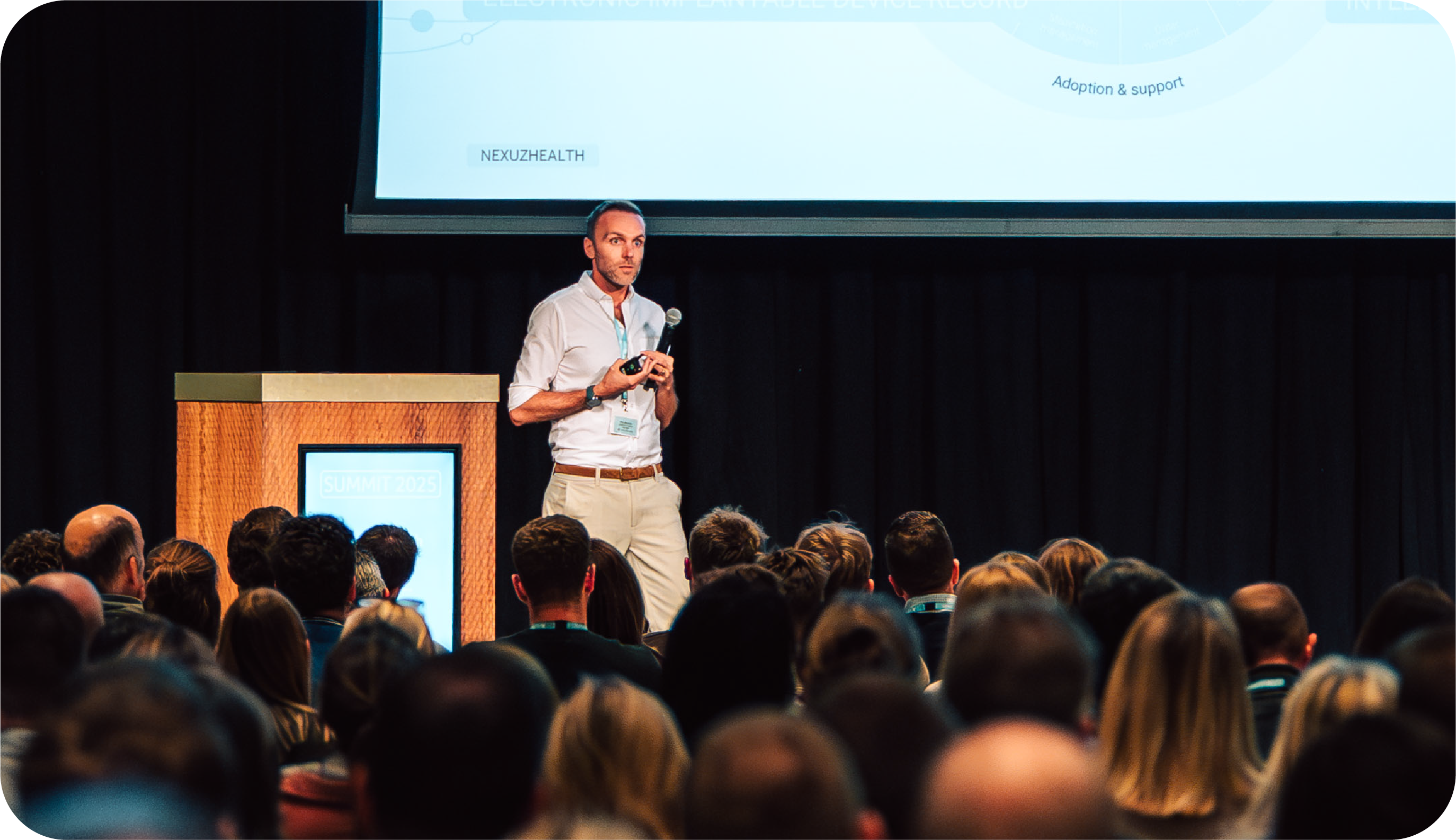
Rien Dieryckx, Product Manager Hospitals at Nexuzhealth

The healthcare landscape has changed profoundly in recent years. At the same time, healthcare has undergone a major digital transformation. Despite this progress, information often remains fragmented between hospital departments, across campuses and, most notably, between different care lines. “The consequences are recognisable,” says Maarten De Gruyter, Business Line Director Hospitals at Nexuzhealth. “Healthcare professionals register data twice, manually transfer information, lose time on administration and, at critical moments, lack a single, clear view of the patient.” Patients also increasingly have higher expectations.

“They want insight into their health record anytime and anywhere.” In that context, integrated care takes on a new sense of urgency. Not as an abstract ideal, but as a necessary way to keep care coherent, affordable and workable.

Strategic Product Manager Rien Dieryckx emphasises that the starting point has shifted. “Our years of experience show that, prior to the implementation of the Nexuzhealth EHR, hospitals were often confronted with challenges that limited seamless collaboration. With one digital health record, healthcare professionals within the hospital work in an integrated way within the same centralised electronic health record. That is already a major step. The next step is that the boundaries between secondary care, primary care and even zero-line care, including patients, informal carers and volunteers, gradually begin to fade.”

According to Maarten De Gruyter, this goes beyond technology. “If you truly want to work in a patient-centred way, information must be available where the patient is. Effective and efficient information exchange prevents patients from having to repeat their story and supports high-quality integrated care. It enables faster diagnosis, avoids unnecessary overuse of examinations and improves care quality without adding administrative burden.”

“Nexuzhealth was the first EHR to truly enable integrated care and telemonitoring, not only by supporting new care pathways, but also by actively learning from them and adjusting where necessary.”

rien
Rien Dieryckx

Product Manager Hospitals

From fragmentation to connection

Integrated care is often immediately associated with interoperability or data exchange between institutions. In practice, fragmentation occurs at three levels, each requiring a different combination of organisation, standardisation and technology.

Within the hospital

The first wave of digitalisation in hospitals is now behind us. “Moving away from paper-based registration and documentation, many processes have already been digitised. In practice, workflows have often been standardised, with or without structured registrations based on the appropriate standards. However, digitalisation in itself is not sufficient for optimal integration. In many healthcare institutions, data is still registered multiple times, nuances are lost between departments, workflows do not align seamlessly, and information cannot always be reused for reporting, follow-up or decision-making.

In an ideal scenario, we evolve fully towards the only-once principle, registering data as uniformly and in as structured a way as possible, so it can be reused meaningfully and reliably, both inside and outside the hospital walls.” Rien Dieryckx agrees. “You want minimal effort for maximum return. That requires not only technology, but also alignment and policy to support healthcare professionals in uniform, structured documentation. While this is often framed as data hygiene, the human factor remains absolutely crucial.”

“If you truly want to work in a patient-centred way, information must be available where the patient is. Effective and efficient information exchange prevents patients from having to repeat their story and supports high-quality integrated care.”
2404-Foto-Jaarverslag_NH_Maarten_De_Gruyter-12-1-1
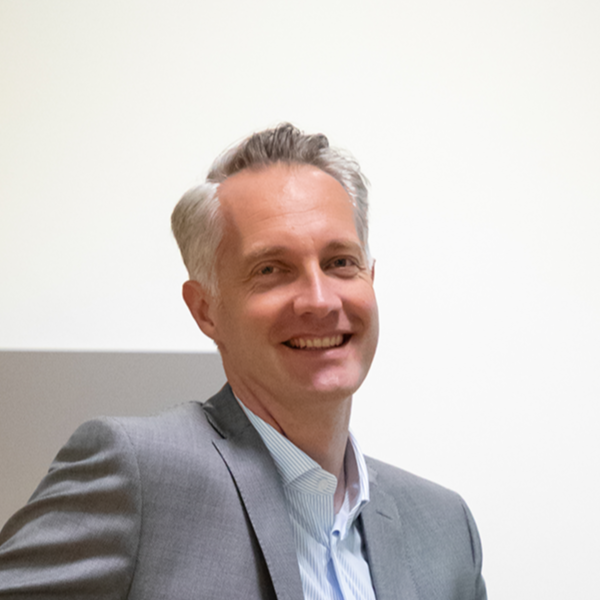
Maarten De Gruyter

Business Line Director Hospitals

Hospital networks

The second level concerns hospital networks and merger structures. Hospitals collaborate more closely, specialised care is being centralised, and physicians increasingly work across multiple hospitals and care institutions. Operationally, this evolution makes sense, but it creates digital friction when processes, systems and data models differ.

“Concentrating specialised care is logical, which means hospitals and care institutions must work together. Software needs to enable collaboration around the same patient record. Think of cardiologists working across multiple hospitals. The complexity is primarily organisational. Technology can facilitate, but agreements on who registers what, which minimum dataset is shared and how responsibilities are distributed determine whether collaboration can scale. You need clarity on which data is shared, when and in what form. Without that concretisation, networks risk remaining stuck with isolated connections that are inefficient and not scalable.”

NH SUMMIT-45-1

Maarten De Gruyter, Business Line Director Hospitals

Across care lines

The third level is the most decisive for patients. The transition between hospital care, general practice, home nursing and other care providers. Due to medical innovation, minimally invasive techniques and budgetary considerations, patients spend less time in hospital and care is increasingly shifting towards primary care. Patients easily find their way to first-line care professionals and paramedics, but their health information and records do not automatically follow. This undermines continuity of care and creates uncertainty around shared responsibility.

Maarten illustrates this with a concrete example. “Imagine an ambulance being called when an elderly patient falls. Through a centralised electronic health record, the emergency physician can immediately see that this is not the first incident. The general practitioner receives a notification of the admission and has access to lab results and medical imaging. Nursing staff can consult the nursing report, or a physiotherapist can review the rehabilitation plan after discharge. The benefits are both clinical and organisational, but they only materialise when information is shared in a controlled manner and when it is clear who takes the lead at each stage of the care journey.”

Rien Dieryckx adds that inefficiencies are often most visible at this level. “Between primary and secondary care, fragmentation remains significant. If you look further, for example at residential care centres, the complexity often increases and the lack of data sharing becomes even more challenging.”

“You want minimal effort for maximum return. That requires not only technology, but also organisational buy-in and policy to support healthcare professionals in uniform, structured data documentation.”
rien
Rien Dieryckx

Product Manager Hospitals

Core principles for integrated care

To make integrated care tangible, it helps to clearly define the concept. “At Nexuzhealth, we therefore always approach integrated care from the patient’s perspective.” Patient-centred care means that the record, communication and decision-making are organised around the patient’s needs. At the same time, patient-centred care implies shared decision-making. This immediately raises a structural challenge: who is responsible within a care trajectory that spans multiple care lines?

Rien Dieryckx highlights a common pain point. “Shared decision-making still requires additional organisational support. Responsibility needs to be assigned, but this is not always explicitly defined. Who is ultimately responsible for the medication scheme? The general practitioner? The last treating physician? Consensus is essential, and this question becomes more urgent as care lines blur and telemonitoring becomes more embedded.

While this consensus is still evolving, Nexuzhealth is already taking steps by establishing a transmural advisory board. This group of independent experts meets to reflect on ethical, legal and practical questions in digital care and delivers guidelines, recommendations and frameworks for agreements.”

Innovation trajectories as accelerators

Gradually, both the regulatory framework and reimbursement models for hospital-at-home initiatives are evolving. One of the earliest trajectories was intravenous antibiotic therapy, which was previously administered exclusively during hospital admission, known as OPAT, Outpatient Parenteral Antimicrobial Therapy. Such innovation trajectories accelerate integrated care. “The hospital prescribes and monitors the treatment, while specialised nurses administer antibiotics in the home setting. This relieves pressure on hospitals, reduces unnecessary visits and increases patient comfort, without compromising quality,” says Rien Dieryckx.

Telemonitoring also illustrates how innovation accelerates the transition towards integrated care. Nexuzhealth was the first EHR to actively enable integrated care and telemonitoring, not only supporting new care pathways but also learning from them and continuously optimising where needed.

Another successful innovation trajectory is the orthopaedic workflow at AZ Herentals. In this project, the hospital focuses on post-operative follow-up from the home setting. Questionnaires and parameter input enable close monitoring of rehabilitation. Data flows back to the EHR via Mynexuzhealth, allowing healthcare professionals to intervene when necessary,” Rien Dieryckx continues.

“The BeWell initiative at AZ Groeninge follows a similar telemonitoring approach for patients with heart failure. Parameters and questionnaire responses are captured in the EHR, with alerts that enable proactive follow-up.”The common denominator is not the technology itself, but the combination of reliable data flows, clear governance and seamless integration into existing workflows.

“Healthcare professionals record data twice, manually transfer information, lose time on administrative tasks and, at critical moments, lack a single, clear view of the patient.”
2404-Foto-Jaarverslag_NH_Maarten_De_Gruyter-12-1-1
Maarten De Gruyter

Business Line Director Hospitals

Conclusion

Integrated care is not a project of a single institution. It is an ecosystem in which patients, hospitals, hospital networks, laboratories, general practitioners, home nursing services and ideally also residential care centres collaborate. This collaboration requires shared agreements, clear responsibilities and technology that does not add complexity but instead reduces administrative burden.

For Nexuzhealth, this translates into an open platform approach, with a focus on a centralised electronic health record and secure data sharing. Open does not mean everything for everyone, but targeted access. The right data, at the right time, for the right healthcare professional. It is a means to ensure continuity of care and improve care quality.

Discover more about Nexuzhealth Hospital: CWS
Request your free personal demo
Read more

Key takeaways from this article

  1. Integrated care as a response to rising costs, workload and fragmentation

  2. The role of a centralised electronic health record, the only-once principle and standardisation

  3. The importance of governance across care lines

  4. Practical workability and accessibility

  5. Innovation trajectories that are already scalable today